1. AI combined with IoT technology
IoT, or the Internet of Things, is a network of physical devices that can collect and exchange data via software, sensors, and internet connectivity. IoT devices continuously collect data through sensors, which is then analyzed to provide valuable insights. This data-driven approach enables accurate decision-making and process optimization.
1.1. How AI integrates with IoT
The powerful combination of artificial intelligence (AI) and IoT enables devices to collect and analyze data using advanced AI algorithms to make intelligent decisions.
Data processing and analysis:
Understanding data quickly and efficiently is a daunting challenge. This is why IoT devices cannot deliver maximum value to businesses. AI algorithms will examine and analyze large datasets generated by IoT, thereby accelerating speed and processes.
Make a decision immediately:
By analyzing large amounts of data from IoT sensors, AI can provide valuable insights for immediate decision-making. For example, in the healthcare sector, AI-powered IoT devices can monitor patient health data, detect abnormalities, and indicate the onset of disease.
Improve efficiency and automation:
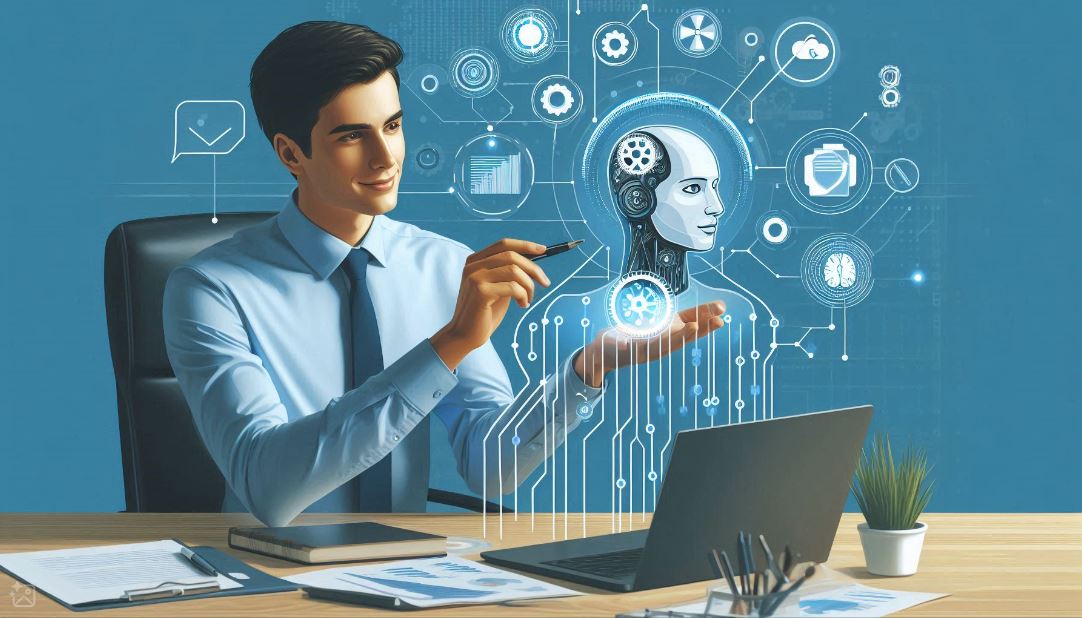
AI-powered IoT devices can make automated decisions based on analyzed data. This includes automating repetitive tasks and processes, adjusting device settings, triggering specific actions, or dynamically adapting to current conditions. Automation improves efficiency, reduces errors, and lowers operating costs for businesses.
Personalization and user experience:
Combining AI and IoT can create unprecedented levels of personalization by tailoring content and services entirely to user preferences. This leads to higher levels of user engagement and satisfaction. For example, NLP and AI can provide “superior” human-machine interactions through sophisticated chatbots and virtual assistants.
1.2 Benefits of combining AI and IoT
- Predictive failure and maintenance: AI-based IoT systems can predict equipment failures and malfunctions to proactively manage maintenance and reduce costs. This benefit is particularly valuable in industries where downtime can have significant financial consequences.
- Intelligent automation: This involves IoT devices automatically performing tasks and making decisions based on real-time data and AI algorithms. This streamlines processes, improves efficiency, and reduces the need for human intervention.
- Analyzing complex datasets: AIoT technology can process large volumes of data generated by IoT devices in real time, identifying valuable insights and patterns that humans might overlook. AI algorithms can process complex data from IoT sensors and filter that data before sending the results to the cloud. From there, valuable patterns, trends, and correlations can be discovered.
- Enhanced security and privacy: AI algorithms can detect potential anomalies and security breaches in real time. This benefit allows businesses and organizations to proactively respond to mitigate risks. Additionally, AIoT can enable data processing and analysis to occur locally on IoT devices, reducing the need to transmit data to external servers and enhancing privacy protection.
- Improved efficiency: AI-powered IoT devices can optimize processes, reduce downtime, and improve overall operational efficiency through real-time remote device monitoring. For example, in manufacturing, AI-powered IoT sensors can monitor device performance in real time, detecting potential problems before they escalate into more serious issues.

1.3 Specific Applications
1.3.1 Production and Supply Chain
AIoT systems are particularly prevalent in the Industrial Internet of Things (IIoT). In manufacturing, such intelligent systems are used to track production processes, monitor machinery in real time, and detect faulty parts.
This allows businesses to identify and resolve issues faster, improve productivity, and reduce downtime. Data from these devices is analyzed using AI algorithms, making it easier to predict maintenance needs and improve production processes.
1.3.2 Healthcare and Medical Services
When AI is applied in healthcare, AIoT can revolutionize patient care by enabling remote monitoring, personalized treatment planning, and predictive analytics for early disease detection. Combining connected medical devices and AI algorithms can enhance diagnostic capabilities, drug development, and treatment outcomes for patients.
1.3.3 Smart Cities
Integrating AIoT technologies can help cities become more efficient, sustainable, and livable. Smart grids, intelligent transportation systems, and environmental monitoring contribute to energy savings, efficient traffic management, and better urban planning.

1.4.4 Agriculture and Environment
By combining AI and IoT, farmers can leverage smart sensors, drones, and predictive analytics to optimize crop management, monitor soil conditions, and improve irrigation systems. AIoT enables precision farming, maximizing yields and minimizing environmental impact.
1.4 Challenges in AIoT Implementation
- Data security and privacy: With the increase in connected devices, the amount of data generated is enormous. Therefore, data security and privacy also present a significant challenge.
- Interoperability and Standardization : Devices used by users in IoT systems are often manufactured by various companies, resulting in different standards and protocols. This can lead to compatibility issues and difficulties in integrating with AI.
- Ethical issues and bias: AI algorithms are prone to bias, creating problems when integrated into IoT systems that make critical decisions, such as autonomous vehicles. Bias in these AI models can result from biased training data or flawed algorithm design, potentially leading to inaccurate results.
- Resource limitations: IoT devices still have some limitations, such as limited processing power, memory, or battery life. These limitations can make it difficult to run complex AI algorithms directly on the devices, failing to fully utilize the potential of AIoT.
- The complexity of data integration: Because IoT devices generate massive amounts of data from entirely different sources and in many different formats, understanding all of that data is a significant challenge. On the other hand, AI solutions and Machine Learning technologies require “standard” data for use in AIoT applications.
2. AI combined with Blockchain technology
Blockchain is a decentralized and immutable digital ledger technology. It consists of a chain of blocks, each containing a transaction record. The distinguishing feature of Blockchain lies in its distributed nature, ensuring that no single entity has control.
2.1 How AI integrates with Blockchain
2.1.1 Enhancing security
The integrity of transactions can be maintained thanks to the ability of AI algorithms to detect and identify fraudulent activities. AI models increase the reliability of smart contracts by identifying and preventing errors. This helps ensure that the terms of the contract are accurately adhered to.
2.1.2 Improving operational efficiency
Integrating blockchain and AI helps organizations make better decisions. Algorithms used in AI process massive amounts of data to uncover useful insights and patterns. This allows businesses to better understand their operations and make data-driven decisions, improving both operational efficiency and competitiveness. The transparency and auditability of blockchain further facilitate this process.
2.1.3 Enhancing transparency and trust
Blockchain is renowned for its ability to create transparent and immutable records. Combining it with AI can improve this by adding intelligent data analysis, ensuring that all transactions and exchanges are transparent, honest, and trustworthy.
2.2 Benefits of Combining AI and Blockchain
- Improved security: Integrating AI algorithms with blockchain technology significantly enhances security measures within financial networks. AI strengthens the inherent security features of blockchain by adding layers of advanced data analysis and pattern recognition, which are particularly crucial for identifying and mitigating potential threats.
- Information analysis: The combination of AI and blockchain improves data analysis with secure, reliable, and accurate data. Blockchain technology promotes data integrity through decentralized storage. Because AI models have reliable access to data, there is no need to worry about data accuracy or reliability.
- Scalability: AI addresses the challenge of blockchain scaling by introducing advanced decentralized machine learning systems and innovative data sharing techniques. This not only improves efficiency but also creates opportunities for startups and businesses within the blockchain ecosystem.
2.3 Specific Applications
2.3.1 Healthcare
Blockchain can maintain secure patient records, preventing forgery. Meanwhile, AI processes this data to generate diagnostic information. The decentralized nature of blockchain ensures that sensitive medical data can only be accessed by authorized parties. This addresses privacy concerns and enhances AI-powered healthcare services.
2.3.2 Finance
In the financial sector, blockchain ensures transaction integrity, preventing fraud. AI models analyze transactions to detect suspicious patterns. Combining blockchain and AI enhances security, speeds up transactions, and optimizes risk assessment. This combination is revolutionizing financial services by improving efficiency and transparency.
2.3.3 Retail
Combining AI with blockchain allows retailers to store customer details in immutable blocks, record entire processes, and analyze factors to build marketing plans. Simultaneously, it improves payment processes and reduces fraud risks.
2.3.4 Supply Chain
Integrating the two technologies can improve transparency, reduce fraud, and enable real-time tracking of goods from production to the end user. AI models can use predefined conditions in smart contracts to automate tasks, such as detecting inventory needs and placing orders with suppliers.
2.3.5 Cybersecurity
Decentralized infrastructure and blockchain technology can serve as encrypted safeguards for AI systems, limiting misuse.
2.3.6 Smart Contract Development
In the future, smart contracts could be developed using natural and prompt languages, rather than programming languages, and then converted into code with the support of ML models. Validators would reach a consensus on the correct output, which would then be executed by the blockchain network.
2.4 Challenges in Implementing AI in Blockchain
- Data security and privacy : AI models are trained on sensitive data stored on the blockchain. This raises concerns about privacy and security, requiring robust security measures.
- Scalability: Integrating AI algorithms into blockchain networks can overload computing resources. This poses scalability challenges.
- Interoperability : Traditional AI models struggle to collect and read data from external sources. For AI systems to integrate into blockchain networks, standardized protocols and interfaces are needed for efficient data sharing.
- Algorithmic bias: AI models easily learn human biases from training data and can amplify these biases. Encoding these biases into an immutable ledger can lead to systematic errors and cause serious ethical problems.
- Legal Issues: An effective regulatory framework is needed to ensure that the integration of AI with blockchain meets all ethical and legal standards. Furthermore, developing standards for AI-based decentralized applications is essential to ensure privacy and foster user trust.
3. AI combined with quantum computing technology.
Quantum computers exploit the unique ability of subatomic particles to exist in multiple states at any given time. Unlike traditional computers, which use bits as the smallest unit of data, quantum computers use qubits (quantum bits).
In addition to performing calculations many times faster than the most powerful supercomputers currently available, quantum computers can also solve complex problems that traditional computers cannot. These include molecular modeling, cryptography, and optimization challenges in AI.
3.1. How AI integrates with Quantum Computing
Quantum AI (QAI) is a technology that combines the power of quantum computing with artificial intelligence. Quantum computing can enhance the capabilities of AI by eliminating the limitations imposed by data size, complexity, and problem-solving time.
Accelerate AI model training:
Training AI models can take weeks, depending on the complexity. Quantum AI can help speed up this process. With quantum algorithms, training can take just a few hours.
Solving the optimization problem:
Quantum computing offers new and efficient solutions for optimizing AI models that traditional computers cannot. The quantum approach to optimization provides solutions that are not only faster but also more accurate, even for extremely complex cases.
Simulation and prediction:
QAI can process vast amounts of information simultaneously, uncovering patterns that traditional AI systems might overlook. This can lead to more accurate predictions, whether in healthcare, finance, or climate science.

3.2 Benefits of Combining AI and Quantum Computing
- Solving complex problems: The power of quantum computers lies in their ability to solve complex problems far more efficiently than traditional computers. The complexity of AI, a challenge that traditional computers cannot solve within a reasonable timeframe, can be easily addressed by quantum computers.
- Improved efficiency and speed: Quantum computers are capable of processing tasks much faster than traditional computers. In other words, AI systems can be trained more efficiently. This is especially important as AI models become more complex and use more data.
- Advanced Machine Learning: Quantum algorithms significantly accelerate machine learning processes by efficiently handling the massive datasets required for training models. For example, quantum-based advanced machine learning can analyze data faster and more thoroughly than traditional methods.
3.3. Specific Applications
3.3.1 Healthcare
In the healthcare field, Quantum AI can accelerate drug discovery by analyzing molecular structures more efficiently. Traditional drug discovery processes are time-consuming and costly, but QAI can model complex molecules and identify potential drugs faster, thereby optimizing personalized treatments.
3.3.2 Financial Services
QAI has the potential to revolutionize the financial industry by enhancing risk analysis, fraud detection, and portfolio optimization capabilities. With its ability to rapidly analyze large volumes of data, QAI can deliver more accurate predictions, helping financial institutions make better investment decisions and improve customer service.
3.3.3 Supply Chain Management
Quantum AI can optimize supply chain management by solving complex optimization problems such as route planning, inventory management, and resource allocation. This can lead to more efficient operations, reduced costs, and a better customer experience.
3.3.4 Energy
AI can optimize energy consumption, predict equipment failures, and manage smart grids. Quantum computing can offer even more benefits by optimizing energy production and distribution networks.
3.3.5 Cybersecurity
As cyber threats become more sophisticated, quantum artificial intelligence can help identify vulnerabilities in networks and predict potential cyberattacks. The ability of quantum computers to process massive datasets allows for the detection of patterns and anomalies that are challenging for traditional systems, leading to more effective security protocols.

3.4 Challenges in Implementing QAI
- Quantum Hardware: Quantum hardware is still in its early stages of development, making it unstable and prone to errors. Quantum processors need to operate at extremely low temperatures, near absolute zero, and are highly sensitive to environmental disturbances. Maintaining balance for quantum operations is very difficult, and building robust, reliable quantum hardware that can operate outside of these environments remains a major hurdle.
- Computational errors: Quantum systems are inherently susceptible to noise and disconnections, which can cause errors during computation. The development of effective error correction methods for the future of quantum computing is still under active research.
- Algorithm development: Quantum computers operate in very different ways than traditional computers, so algorithms need to be developed from scratch. This is also a significant challenge when deploying QAI.
- Accessibility: The investment cost for quantum computers is extremely high. This limits their accessibility for many businesses and organizations, especially smaller ones that lack the resources to invest in advanced technology.
- Cybersecurity : As quantum computing develops further, many current methods of information security encryption may become obsolete. Furthermore, the threat of quantum-based cyberattacks is a significant concern.
- Privacy: Quantum AI is capable of processing and analyzing massive amounts of data at extremely high speeds, including personal data. This raises concerns about data misuse and violations of user privacy.
4. Frequently Asked Questions about AI in combination with other technologies
4.1 How does AIoT (AI + IoT) work and what benefits does it offer?
AIoT is a combination of artificial intelligence and the Internet of Things, enabling IoT devices to collect data and use AI algorithms to analyze it and make intelligent, automated decisions. Key benefits include:
- Predictive failure and proactive maintenance: The system can predict failures before they occur, reducing downtime and maintenance costs.
- Intelligent automation: Devices that automatically perform tasks based on real-time data.
- Complex data analysis: Processing large volumes of data, identifying valuable patterns and trends.
- Enhanced security: Real-time detection of anomalies and security breaches.
- Personalized experience: Tailoring services to each user’s preferences.
4.2 Why are AI and Blockchain such good complements each other?
AI and Blockchain form a powerful combination because they overcome each other’s limitations:
- Enhanced security: AI detects fraud and suspicious activity, while Blockchain ensures immutable data integrity.
- Improved data quality: Blockchain provides reliable and transparent data for AI models.
- Increased transparency: Blockchain creates transparent records, AI adds intelligent analysis to ensure integrity.
- Solving the scaling problem: AI helps optimize blockchain network performance through machine learning and data sharing techniques.
This combination is particularly effective in fields such as finance, healthcare, supply chains, and cybersecurity.
4.3 What problems can Quantum AI (QAI) solve that traditional AI cannot?
Quantum AI harnesses the power of quantum computing to overcome the limitations of traditional AI:
- Accelerate model training: Reduce training time from weeks to just a few hours.
- Solving complex optimization problems: Addressing issues that traditional computers cannot solve in a reasonable amount of time.
- More accurate simulation and prediction: Processing large amounts of information simultaneously, finding patterns that traditional AI might miss.
- Big data analysis: The ability to process extremely large datasets at exceptional speed.
QAI is particularly useful in drug discovery, financial risk analysis, supply chain optimization, and cybersecurity.
4.4 What are the main challenges in deploying these AI-integrated technologies?
Each combination presents its own unique challenges:
AIoT:
- Data security and privacy protection with massive amounts of data.
- Compatibility between devices from different manufacturers
- Limitations in IoT device resources (power, memory, battery)
- The complexity of integrating data from multiple sources.
AI + Blockchain:
- The problem of scaling and overloading computing resources.
- Difficulties in interoperability and standardization.
- Algorithmic bias can be permanently coded into the blockchain.
- A clear legal framework is needed.
Quantum AI:
- Quantum hardware is unstable and requires special operating conditions.
- Extremely high investment costs, limiting accessibility.
- A completely new algorithm needs to be developed.
- Threats to current encryption methods
4.5 What practical applications are being successfully implemented with these combined technologies?
AI-integrated technologies have had many successful practical applications:
AIoT:
- Manufacturing: Real-time machine monitoring, predictive maintenance in IIoT.
- Healthcare: Remote health monitoring devices for early disease detection.
- Smart cities: Smart grids, automated transportation systems.
- Agriculture: Precision farming with smart sensors and drones
AI + Blockchain:
- Finance: Fraud detection, risk assessment optimization
- Healthcare: Securing patient records, preventing data falsification.
- Supply chain: Transparently tracking goods from production to the end user.
- Smart contracts: Automating contract execution
Quantum AI:
- Drug discovery: Complex molecular modeling accelerates new drug development.
- Financial services: Advanced risk analysis, portfolio optimization.
- Cybersecurity: Predicting and Preventing Sophisticated Cyberattacks
- Energy management: Optimizing the power grid and energy distribution.
Essentially, the combination of AI and technologies such as IoT, Blockchain, and Quantum Computing is creating breakthroughs in many fields. This combination promises to bring countless opportunities for innovation and improved business efficiency, transforming industries and social norms.