
1. The top challenges in AI development
1.1. Lack of high-quality data
Input data is a crucial factor in determining the accuracy and reliability of an AI system. Some low-quality data, such as that from social media, often contains misinformation, directly impacting the results. For example, Microsoft’s chatbot, trained on Twitter data, resulted in racist and misogynistic responses.
To overcome this problem, AI developers are prioritizing the use of high-quality data sources such as books, newspapers, Wikipedia, and content from vetted websites. However, collecting diverse and accurate data remains a major challenge requiring significant resources in terms of time and cost.

1.2. High AI training and development costs
Research from Stanford and Epoch AI indicates that the cost of training and developing AI systems has steadily increased over the years due to the ever-growing training capacity of digital intelligence models. Systems such as large-scale language modeling (LLM) often require thousands of powerful GPUs, with hardware infrastructure alone costing millions of dollars.
Furthermore, the salaries of the workforce, including data scientists, software engineers, AI specialists, etc., also account for a significant portion of the total cost. These positions require high levels of expertise, and competitive salaries to attract and retain talent further increase the financial burden.

Therefore, for small and medium-sized enterprises (SMEs), the high cost of developing artificial intelligence is a significant barrier, especially when competing with large corporations that have abundant resources. These businesses often lack the capacity to invest in advanced infrastructure or pay for expert teams, making it difficult for them to keep up with the pace of innovation in the industry.
1.3. Power shortage
Although AI has surpassed humans in many tasks thanks to its accuracy and efficiency, behind this success are systems that consume an alarming amount of electricity. For example, creating GPT-4 consumes approximately 50 gigawatt-hours, equivalent to 0.02% of California’s annual electricity production.
According to a report from the International Electricity Agency (IEA), information technology accounts for approximately 3% of global electricity production. The energy demand of data centers is projected to increase sharply from 460 terawatt-hours (2022) to 1,000 terawatt-hours by 2026. This indicates that as AI technology continues to develop, it will require increasingly powerful and energy-intensive data centers.

1.4. Impact on the labor market
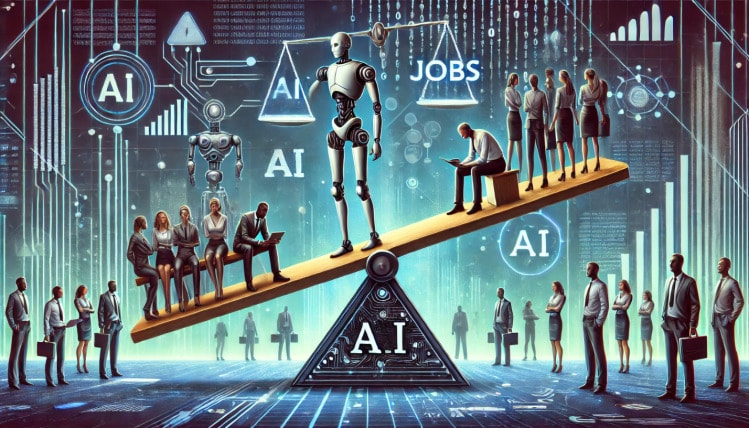
According to Kristalina Georgieva, Managing Director of the International Monetary Fund (IMF), AI technology is expected to impact 40% of jobs globally. Half of these could be negatively affected, with jobs being replaced or demand decreasing, while the rest will see improved productivity thanks to intelligent systems.
The development of AI is reducing the need for unskilled labor, especially in simple manufacturing and service industries. Repetitive, low-skill jobs such as assembly, transportation, quality control, or customer service are gradually being automated by artificial intelligence systems and intelligent robots.
Workers are struggling to transition to high-skill professions like AI. Retraining is often time-consuming and costly, while the pace of development in smart digital technologies is too rapid. The gap between workers’ skills and the demands of new jobs is widening, leaving many behind.
1.5. Ethical issues and privacy rights
As artificial intelligence develops, ethical issues and privacy concerns are among the major challenges facing businesses, organizations, and society.
AI requires a large amount of data to train and operate, and this raises concerns about how users’ personal information is collected, used, and protected. Without strict controls, this technology could infringe on users’ privacy, such as using images and personal information without consent.

1.6. Cybersecurity Risks
AI could increase the risk of cyberattacks and abuse in a variety of ways:
- Attacks on training data: If this data is hacked or falsified, artificial intelligence models can learn from the misinformation, leading to erroneous or harmful decisions. For example, attacks on banks’ AI systems could alter how AI analyzes and approves loans.
- Attacks on AI systems: Complex models like deep neural networks can become targets of cyberattacks. Hackers can exploit vulnerabilities in algorithms or software to falsify the results produced by the AI system, causing significant damage to organizations and users.
- Loss of control and security of AI: One of the major concerns is that AI could evolve and operate beyond human control. If a system is compromised and controlled by an attacker, it could become a tool for security breaches, data theft, or system sabotage.
- Personal data security: AI processes a large amount of personal and sensitive data, increasing the risk of data breaches. Without proper protection, user data could be leaked or exploited for malicious purposes.
Therefore, AI development requires not only technological advancements but also effective cybersecurity measures to protect systems, data, and users from potential threats.

2. Solutions to promote the development of AI
2.1. At the national level
2.1.1. Investing in research and development
According to Google’s research, the potential for AI development in Vietnam is enormous. If digital intelligence tools are widely applied, the estimated economic benefits for businesses could reach approximately VND 1,890 trillion (USD 79.3 billion) by 2030. This figure corresponds to about 12% of Vietnam’s GDP by 2030.
Therefore, to promote the development of this smart technology, Vietnam in particular and countries in general need to prioritize investment in research and development of smart digital technology. Providing funding for research projects, laboratories, scientific organizations, etc., will help discover new advances in the field of AI, enhancing the country’s competitiveness in the global technology market.
2.1.2. Infrastructure Development
Infrastructure is a core element in AI development, especially for complex models requiring high computing power and modern GPUs. However, in Vietnam, many businesses are facing a lack of robust infrastructure to train large-scale AI models.
For example, modern intelligent models like ChatGPT’s Large Language Model (LLM) possess up to 175 billion parameters, while the current capabilities of domestic systems are limited to only 7-10 billion parameters. This shortfall creates a significant gap, making it difficult for domestic businesses to compete with large international corporations.
To overcome this challenge, the government needs to invest heavily in domestic technology companies and AI research labs at key universities. Additionally, implementing an open data policy will help businesses and research institutions access public data sources, thereby promoting more effective AI development and application.

2.1.3. Human Resource Development
Human resources are the core element in the development of AI. Countries compete not only in technology but also in human resources and the environment for innovative development. Policies for training high-quality human resources in this field need to be prioritized. The government should create specialized training programs to attract talent from both within and outside the country.
2.1.4. Establishing a legal framework
The government needs to develop policies on privacy, data security, and regulations related to the use of data in AI systems. Simultaneously, developing ethical standards for AI applications will help prevent risks and ensure that artificial intelligence develops in a way that serves the common good of society.
2.1.5 Strengthening AI management policies
AI is a rapidly evolving and innovative field. However, there is currently a lack of clear legal frameworks and regulations to govern AI products. This makes it difficult to manage and promote the safe and legal development of the AI market.
Therefore, the government needs to develop a clear policy framework, focusing on objectives such as:
- Strengthen the management of research, development, and application of AI products.
- Promoting a legitimate, safe, and trustworthy AI market.
- Encourage research into advanced technologies such as human-like artificial intelligence, virtual reality, and simulation of vision, hearing, language, and thought.
- Develop training programs at universities, encouraging students and individuals passionate about AI research to participate in these technology development projects.
- Participate in international and regional standards organizations to develop standards and regulations that align with global technological trends.

2.2 At the enterprise level
2.2.1 Investing in AI technology
Investing in cutting-edge technology, including powerful computing systems, advanced AI software, and tools, will be crucial for the successful deployment of AI solutions. Businesses need to build solid technological foundations for training and deploying AI models, such as high-performance computing systems, machine learning software, and big data analytics tools.
2.2.2 Building a talent pool
Businesses need to build a highly skilled AI workforce, including data scientists, experts, and software engineers. They should provide advanced AI training for employees, as well as encourage learning and research to improve their ability to apply AI in business operations. A strong workforce will be key to businesses developing effective solutions and optimizing processes.
2.2.3 Leveraging business data
Businesses need to focus on collecting, analyzing, and optimizing existing data. Customer data, product data, and service data can be used to train AI models. This can then optimize marketing strategies, improve service quality, and lead to more accurate business decisions.

2.2.4 Development of AI products and services
Businesses can consider developing unique AI products and services to meet the needs of customers in their respective industries. Creating new, highly applicable products using this technology will help businesses not only optimize internal operations but also expand their market and increase product value.
2.2.5 Enhancing security and ethical compliance
Businesses need to ensure that the AI solutions they develop comply with legal regulations regarding data security and privacy. At the same time, they need to establish ethical guidelines for the application of artificial intelligence to avoid risks such as discrimination, bias, or violations of consumer rights.
3. Frequently Asked Questions about the Challenges of AI Development
3.1 Why is high-quality data important for AI development?
Input data is a crucial factor in determining the accuracy and reliability of an AI system. Poor-quality data, such as that from social media, often contains misinformation, directly impacting the results. A prime example is Microsoft’s chatbot, trained on Twitter data, which resulted in racist and misogynistic responses. Therefore, AI developers are prioritizing high-quality data sources such as books, newspapers, Wikipedia, and content from moderated websites.
3.2 How expensive is it to develop AI and why?
The cost of AI development is currently very high and continues to rise over time. Systems like large language modeling (LLM) often require thousands of powerful GPUs, costing millions of dollars just for hardware infrastructure. In addition, the salaries of experts, including data scientists, software engineers, and AI specialists, also account for a significant portion of the total cost. This creates a major barrier for small and medium-sized enterprises (SMEs) wanting to develop AI.
3.3 How much power does AI consume?
AI consumes electricity at an alarming rate. Creating GPT-4 consumed approximately 50 gigawatt-hours, equivalent to 0.02% of California’s annual electricity production. According to the International Electricity Agency (IEA), the energy demand of data centers is projected to increase sharply from 460 terawatt-hours (2022) to 1,000 terawatt-hours by 2026. This demonstrates the enormous energy requirements of AI development.
3.4 How could AI impact the labor market?
According to the IMF, AI is expected to impact 40% of jobs globally. Half of these could be negatively affected, with jobs being replaced or demand decreasing, while the rest will see improved productivity. AI is reducing the demand for unskilled labor, especially in repetitive, low-skill jobs such as assembly, shipping, and quality control. Workers are struggling to transition to higher-skill professions due to the time-consuming and costly retraining required.
3.5 What cybersecurity risks could AI pose?
AI can increase the risk of cyberattacks in several ways:
1. Attacks on training data – if the data is falsified, the AI will learn from the misinformation and make incorrect decisions.
2. Attacks on the AI system – hackers can exploit vulnerabilities to falsify results.
3. Loss of control over the AI – the system could evolve beyond human control and become a tool for security breaches.
4. Leakage of personal information – AI processes large amounts of sensitive data, increasing the risk of information leaks if not properly protected.
In summary, while AI offers many development opportunities, it also poses significant challenges regarding data quality, human resources, privacy, and more. To fully leverage the potential of digital intelligence, close collaboration between governments, businesses, and research institutions is necessary, along with sound policies and investment strategies.